
Independent browser-game field notes
Trash Sort Level 1: Sorting Tubes, Reserve Space and the Finish Screen
A desktop opening-level guide to grouping cartons and boxes between tubes, with the observed six-move result and the limits of the recycling theme.
View provider sourceOpens the attributed provider page. NovarGame does not embed this third-party runtime or claim to operate the game.
Start with the tubes, not the scenery
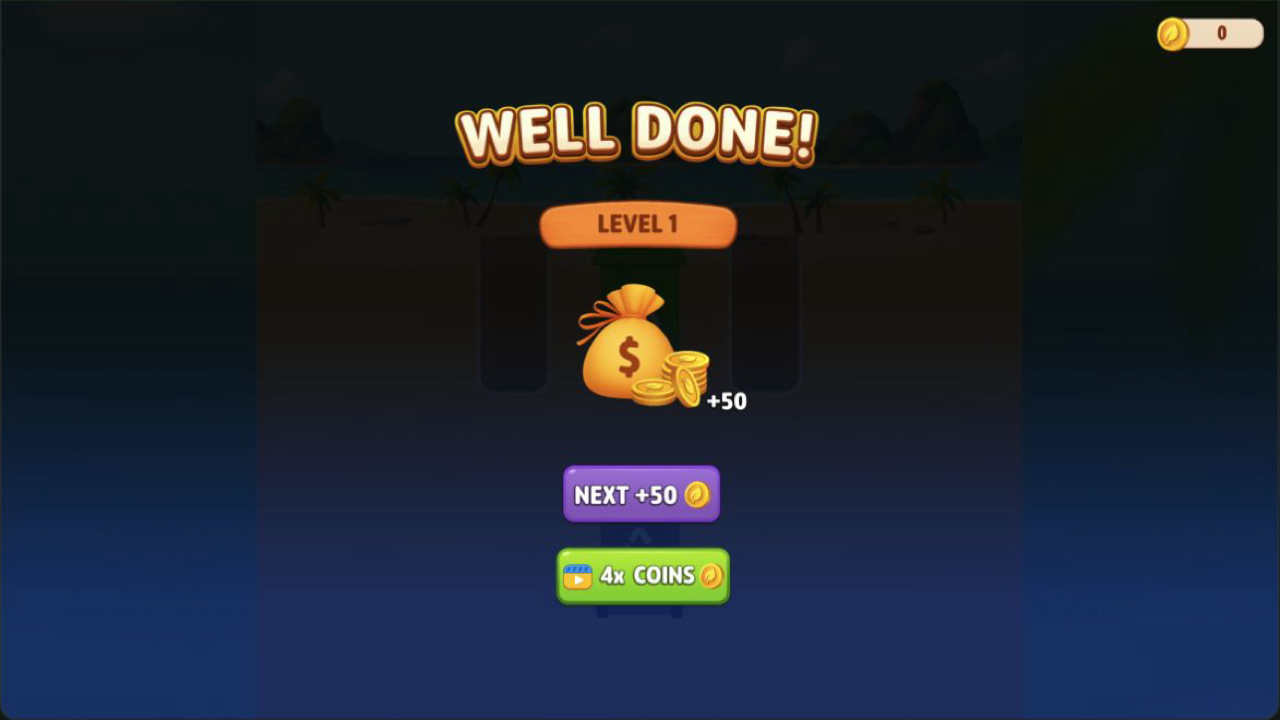
The tested opening of Trash Sort is a container-sorting puzzle. Three tubes hold mixed waste items and a fourth tube provides empty reserve space. The practical objective is to consolidate matching items. In the recorded desktop session, milk cartons and cardboard boxes formed completed groups, which changed into green recycling bins before the game displayed Well Done.
That is different from dragging loose litter around an environmental cleanup scene. The provider describes recycling and environmental recovery, but our Level 1 record establishes a tube puzzle. Use the visible board to decide what to do. A bottle or carton is a matching symbol here; this opening level should not be treated as a lesson in real-world waste disposal rules.
Read the top item before choosing a destination
Begin by identifying the item exposed at the top of each occupied tube. An item lower in a stack is not the next available choice merely because you can see it. Compare the available top items, then identify a receiving tube that lets you bring matching items together. The empty tube gives you a place to move a blocking item while you uncover the group beneath it.
The important planning question is what a transfer exposes. Moving something into the reserve tube may look like a detour, yet it can reveal the carton or box needed to complete another group. After each transfer, inspect the new top items before deciding on the next source. Do not assume the same tube should remain the source throughout the sequence.
What the completed attempt establishes
The August 28 desktop record reports six source-to-destination moves, consolidation of both waste groups, and a Well Done screen offering +50. It does not preserve every intermediate arrangement, so this guide does not invent a numbered six-move solution. The reproducible part is the selection process: inspect the tops, use reserve space to expose matches, and confirm the completed group before moving on.
The result screen matters more than the reward number when checking success. We observed the +50 offer but did not open a reward-advertising flow. That observation establishes an opening-level finish, not whether the offer is unconditional or how later rewards work. If your layout differs, use its current item order rather than trying to reproduce a sequence from a different board.
Separate a missed input from a bad move
The recorded advertisement required a second close confirmation before the puzzle became usable. A page overlay and a game board are different input targets. Wait until the board is visible and responsive, then select the intended source and destination. Repeated clicks through an overlay are not a useful way to diagnose a sorting rule.
The provider lists desktop and mobile input, but our retained session uses a desktop mouse. Mobile touch controls were not tested. The provider's general drag-and-drop description is not evidence that every interaction in the observed tube board requires dragging. Follow the current board feedback and distinguish the provider's instructions from this particular session.
Compare it with Color Sort Puzzle
Trash Sort and Color Sort Puzzle both make temporary container space useful, but their recorded opening tests differ. Trash Sort required six transfers of pictured objects; Color Sort Puzzle finished its introductory two-green-flask board with one pour. For a reader choosing an opening task, that makes Trash Sort the more involved example in these records. It does not establish a ranking of their later difficulty.
Choose Trash Sort for a compact object-sorting exercise with a visible completion state. Choose Color Sort Puzzle if you first want to understand source-and-destination selection on a simpler introductory board. Neither record supports claims about an entire campaign, accessibility across all colors, or long-term educational benefit.
What this guide does not cover
Only the first level was completed in the retained desktop session. Later waste types, shops, move limits, difficulty progression, reward ads and mobile behavior were not tested. The recycling theme is visible, but a changing world or a full environmental simulation was not demonstrated. The linked Playgama page runs the game under its own terms and may show its own advertising; NovarGame provides the guide and does not host that runtime.