
Free browser game and player guide
Match Challenge Game Guide and Category Sorting Notes
Match Challenge asks players to inspect mixed objects and select four that belong to the same category, such as fruits, tools, animals, or household items. These notes explain how to spot groups without rushing.
Play Match ChallengeOpens the Playgama-supplied game on a separate, ad-free runtime page.
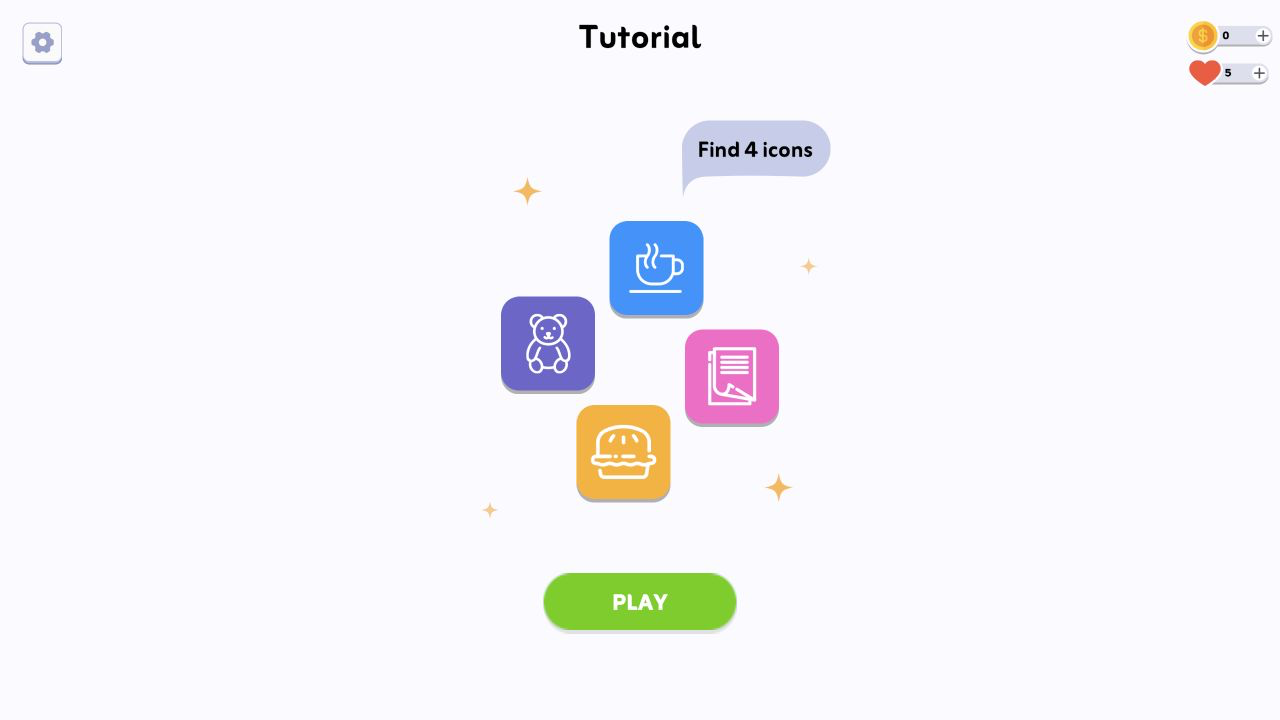
Match Challenge is about category thinking
Match Challenge has a clean puzzle idea: a set of mixed items appears, and the player must tap four that share a common category. The categories can include fruits, tools, animals, household objects, and other everyday groups. Later rounds add time pressure, but the core skill is not speed. The core skill is recognizing what kind of relationship the game is asking for.
This makes the game useful as a light brain-training puzzle. It rewards vocabulary, observation, and flexible thinking. Four items may share a theme even if they do not look visually similar, so the player has to think beyond color or shape.
How to find the group
Start by scanning the whole item set before tapping. Look for obvious families first: foods, living things, objects used in the same room, or tools with a shared purpose. If a group has three clear members, search carefully for the fourth before submitting. A rushed third or fourth tap is where many mistakes happen.
Do not assume the largest or brightest items belong together. Category puzzles often mix visual distractions with conceptual matches. A banana and a hammer may both be yellow, but they do not belong to the same useful category. Function and identity matter more than surface color.
The provider lists mobile and desktop support, while NovarGame verified only the desktop runtime. On any listed device, pause before confirming a set and keep enough of the objects visible to compare the category.
Handling the clock
When timed rounds begin, use a two-pass strategy. First pass: identify any obvious category. Second pass: verify that all four selected items truly belong. This is faster than tapping uncertain items and losing time to correction.
If stuck, eliminate outliers. Items that clearly belong to no visible group can be ignored temporarily. The remaining objects often reveal the intended set. This method turns confusion into a smaller search.
Mistakes can teach category boundaries. If one item looked similar but was rejected, ask what made it different. The next level may use the same kind of trick.
Good session choice
Match Challenge suits players who like classification puzzles, quick thinking, educational play, and simple selection controls. The provider describes it as mobile-friendly, but NovarGame did not independently test mobile input quality.
Players who want action may find it too quiet. Players who enjoy finding the hidden connection between everyday objects should find the challenge satisfying.
Training the eye for category traps
The most interesting rounds are the ones that include near-matches. A spoon may sit near tools, a toy animal may sit near real animals, or a household object may share a color with fruit. These are not unfair tricks; they are the point of the puzzle. A strong player asks what category name would include all four selected items. If the name feels vague, the match is probably unsafe.
For timed rounds, trust categories that can be named clearly. "Things used in a kitchen" is stronger than "things that look round." Clear language leads to cleaner choices.