
Free browser game and player guide
Paint & Roll: Connected Rollers and Careful Switching
Paint & Roll is a compact color puzzle where connected rollers must cover every platform while staying balanced and away from the water.
Play Paint & RollOpens the Playgama-supplied game on a separate, ad-free runtime page.
The real challenge behind the simple idea
Paint & Roll has a clean objective: roll across the platforms and paint every required surface. The twist is that the rollers are connected, so one movement is rarely isolated. A route that looks safe for the active roller can drag the connected roller into a bad position, and a switch made one moment too late can leave part of the board unreachable.
That connection is what makes the game more interesting than a basic coloring puzzle. You are not only filling tiles. You are managing a small moving system. Every turn changes balance, spacing, and the angle between rollers. The water hazard adds pressure because one careless drop ends the level immediately. A finished board feels good because it means you understood both the route and the relationship between the rollers.
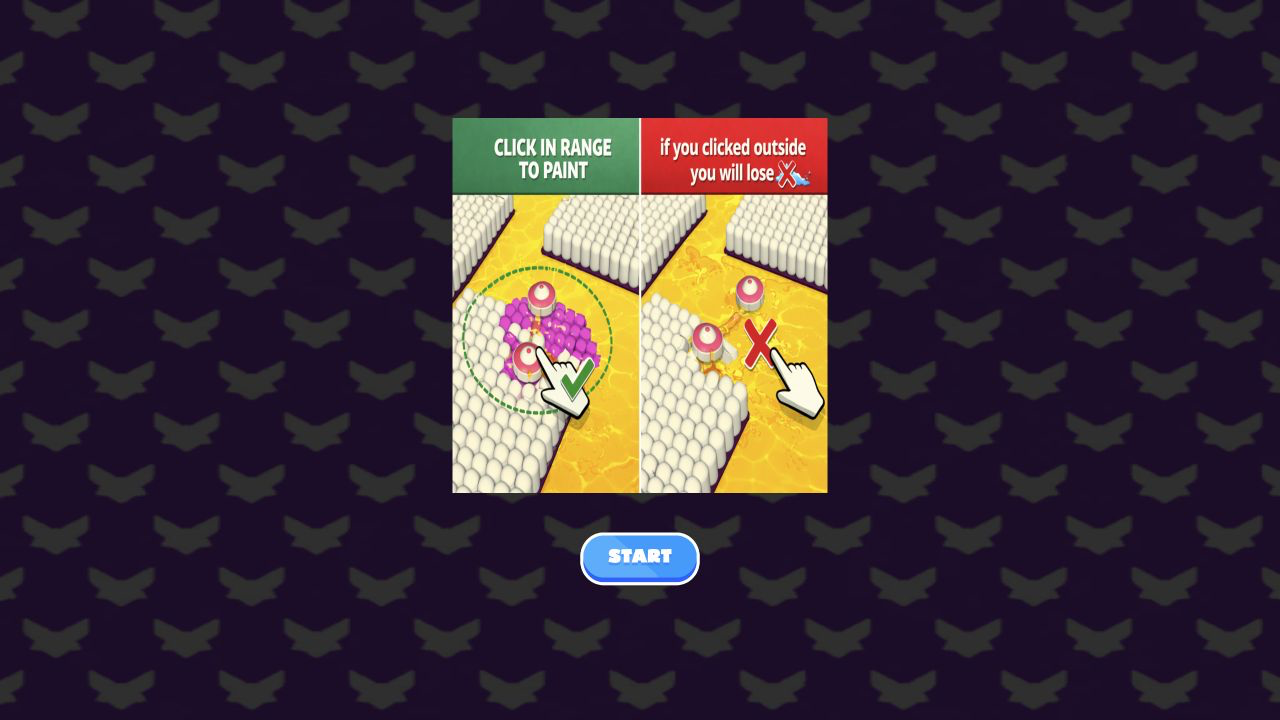
The game is easy to learn because the control idea is direct: tap or click to switch which connected roller you control, then roll with attention to direction and timing. The difficulty comes from seeing two or more consequences at once.
First-session advice
Begin each level by looking for the safe backbone of the board. Usually there is a path that keeps the rollers on solid ground while painting a large portion of the layout. Follow that first before chasing isolated corners. If you rush toward a small unpainted patch too early, the connection may pull the other roller into water or force you into an awkward recovery.
Switching is the main skill. Treat a switch as a planned move, not a reaction. Before you tap, ask where the controlled roller will go next and what the connected roller will do because of that change. The best switches often happen before the board looks dangerous. Waiting until a roller is already near the edge can make the next input too cramped.
The provider lists desktop and mobile support. NovarGame verified the desktop runtime only, so no first-hand mobile feel is claimed. On a smaller display, the important usability check is whether both ends of the connected rollers remain visible after a long move.
Where players usually fail
The most common failure is tunnel vision. The active roller grabs your attention because it is the one you are steering, but the inactive roller still matters. It can slide, swing, or sit in a position that blocks the next route. If you keep losing to water, watch the roller you are not controlling during the next attempt.
Another mistake is painting the board in scattered pieces. Random coverage leaves awkward single tiles that require risky backtracking. A better plan is to paint in strips or loops whenever the level shape allows it. Cover a section cleanly, switch at a stable point, then use the connection to pivot into the next section.
Players also tend to over-correct after a near miss. A sudden switch can save a roller, but it can also create a worse angle. When possible, use small planned movements to bring the pair back to a stable alignment before trying to finish the level.
Why the game is satisfying
Paint & Roll works because completion is visible. You can see the board gradually turn into a finished painting, and every unpainted space tells you what still needs to be solved. The water hazard keeps the puzzle from becoming passive, while the connected rollers keep the movement from becoming automatic.
It is a strong choice for players who like route puzzles, short retries, and clean visual feedback. It does not require a long tutorial, but it does reward thoughtful play. If you enjoy games where a small change in order makes the difference between a smooth finish and a total reset, this one fits well.
What gives it identity
This listing needs specific explanation because the value of Paint & Roll is not just "paint everything." The connected-roller mechanic changes how the player thinks about space. Useful guidance should mention switching, balance, water danger, route cleanup, and the need to watch inactive rollers. That is what makes the page helpful for someone comparing puzzle games in the catalog.