
Free browser game and player guide
Jigsaw Solitaire Puzzle Game Guide and Snaptaire Strategy
Jigsaw Solitaire Puzzle blends sliding card movement with jigsaw-style pattern matching, letting players drag cards, lock matching patterns together, and move connected groups as one. These notes explain how to avoid awkward placements.
Play Jigsaw Solitaire PuzzleOpens the Playgama-supplied game on a separate, ad-free runtime page.
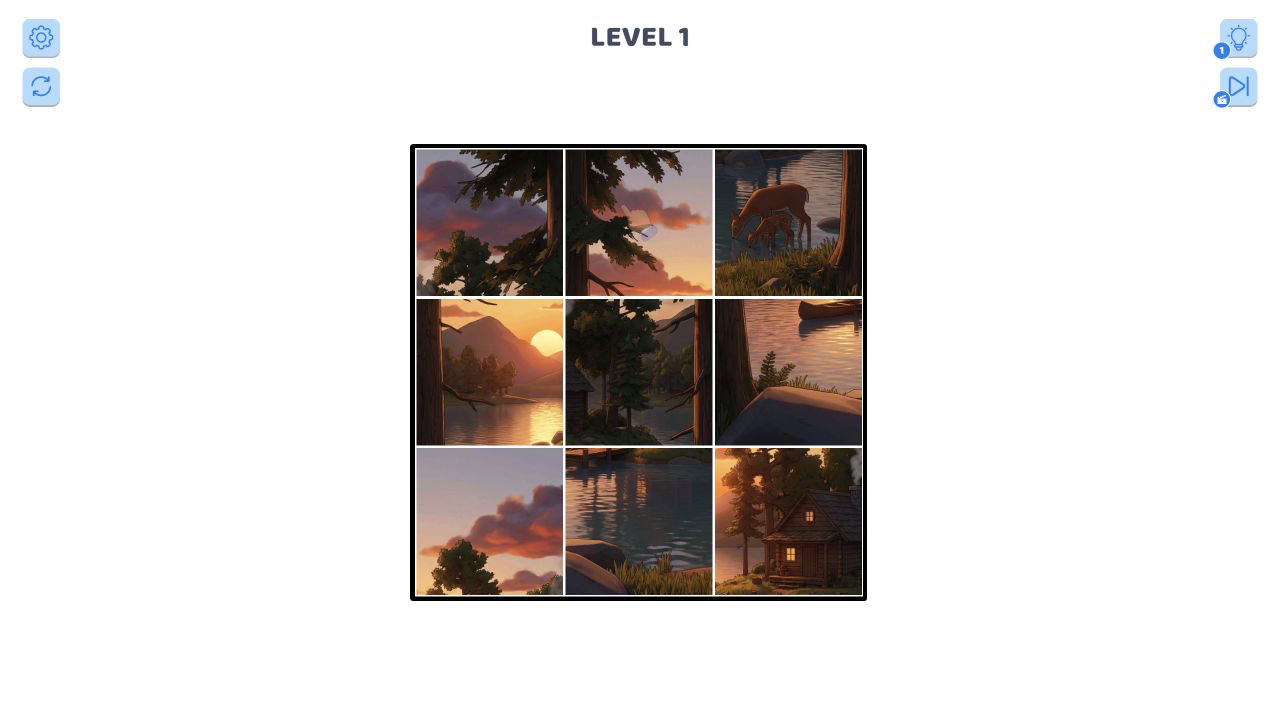
Jigsaw Solitaire Puzzle is a hybrid of cards and image assembly
Jigsaw Solitaire Puzzle, also described as Snaptaire, combines two puzzle feelings. Cards slide around the play area like solitaire pieces, but matching patterns lock together like jigsaw fragments. When correct cards touch, they form a connected group that can be moved as one. That makes the game more dynamic than a static jigsaw board.
The main challenge is space. A card can be moved anywhere, but placing it carelessly may block a better connection or make groups harder to maneuver. The best play grows organized clusters while keeping enough room to slide pieces into place.
Controls and first-session flow
The control is press-and-drag. Move a card, let matching patterns touch, and build connected groups. Because groups can move together, early correct connections reduce clutter. However, a large group can also become awkward if it is assembled in the wrong part of the board.
The source mentions tricky placements that can break groups apart, especially during a fast countdown mode. That means calm placement matters. Players should learn the normal mode first before treating speed as the main challenge.
Better placement habits
Build small groups, then connect them. Trying to solve the whole image from one growing mass can make the board cramped. Two or three solved clusters are easier to move and compare. Once their edges are clear, connect them into a larger image.
Keep open lanes. A narrow board full of scattered cards leaves no room to slide a needed piece. Move finished groups aside and keep the center available for testing. If a group breaks, check whether it was dragged through a tight space or connected at a weak angle.
Look for pattern continuation rather than only color. Two cards may share a color but belong in different parts of the image. Lines, symbols, and repeated motifs are better clues.
Best kind of player
Jigsaw Solitaire Puzzle suits players who enjoy sliding puzzles, jigsaw matching, and hybrid mechanics that feel familiar but not ordinary. The provider lists mobile and desktop drag controls; NovarGame verified only the desktop runtime.
Players who want traditional jigsaw piece shapes may need a moment to adjust. Players who enjoy arranging cards into a picture should find the Snaptaire idea satisfying.
The hybrid format also makes replay interesting because the player can improve the order of assembly. A cleaner run might build corners first, preserve sliding lanes, or connect groups only when there is enough room to move them safely.
If a countdown mode is active, accuracy still beats panic. A fast wrong placement can break a useful group, while a slightly slower correct slide keeps the picture growing and saves time later.
That makes the game fairer than it first looks.