
Free browser game and player guide
Burger Life: Restaurant Growth Notes
A practical review of Burger Life, a restaurant management game about equipment, serving customers, hiring employees, and growing a burger business.
Play Burger LifeOpens the Playgama-supplied game on a separate, ad-free runtime page.
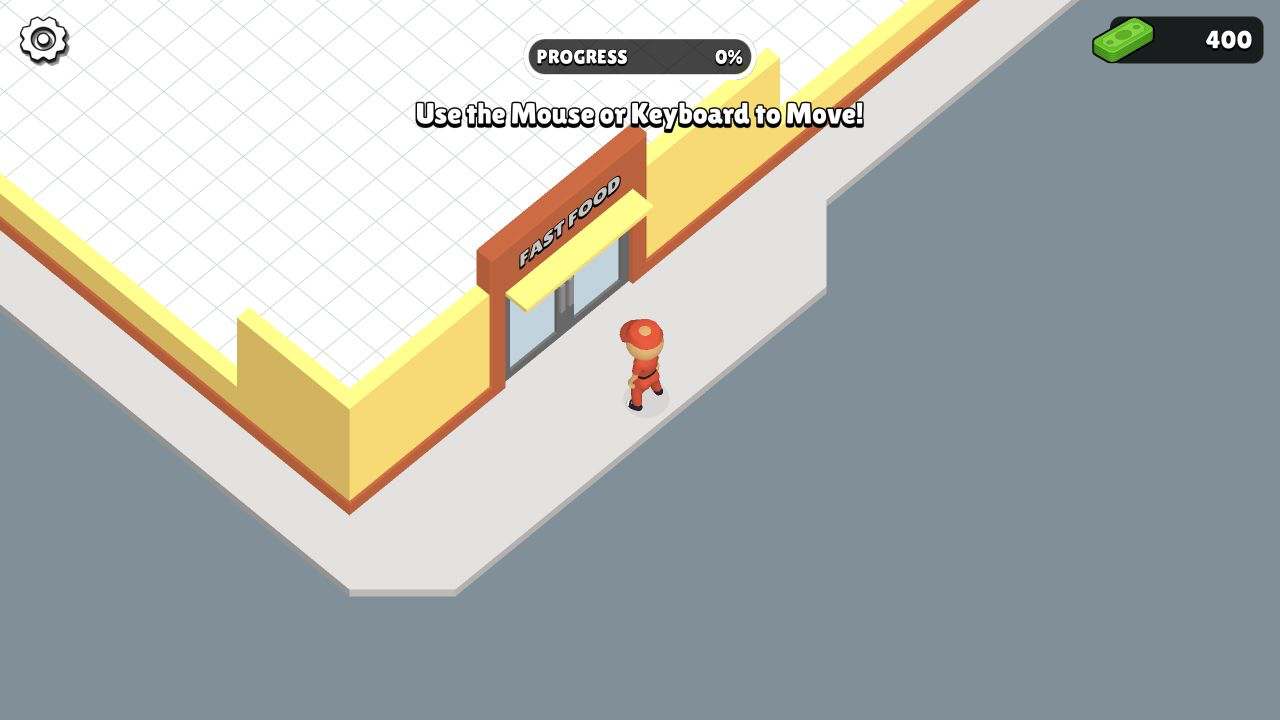
Starting the restaurant
Burger Life is a simulation game where the player builds a burger restaurant from the ground up. The early loop is easy to understand: buy essential equipment, serve customers, earn money, hire employees, and expand the business. The fun comes from making the restaurant run more smoothly over time.
This is a progression game, not just a cooking screen. Each improvement should reduce a bottleneck. If customers wait too long, service speed matters. If money comes in too slowly, equipment or staff may be the better upgrade. If the restaurant feels cramped, expansion becomes important.
Movement and task flow
The provider instructions list WASD, arrow keys, or mouse movement on desktop and swipe movement on mobile. NovarGame verified only the desktop runtime. Since tasks are spread across the restaurant, route efficiency matters more than the specific listed input method.
Try to group tasks. Serve nearby customers, restock or prepare when the path is convenient, then spend earnings when an upgrade clearly solves a problem.
Hiring and upgrades
Employees change the rhythm because they can remove repetitive pressure. Hiring too early may feel expensive, but waiting too long can leave the player doing every task manually while the restaurant grows. The best time to hire is when a repeated task is clearly limiting progress.
Equipment upgrades should support the flow. A shiny upgrade is less useful than one that increases throughput, reduces waiting, or unlocks the next business step.
Customer flow
Watch where delays form. Customers may wait because food preparation is slow, because movement paths are inefficient, or because the restaurant has not hired enough help. Those are different problems, and each one needs a different investment.
The most satisfying growth comes when a new purchase visibly changes the restaurant rhythm. If an upgrade makes the next customer cycle smoother, it was probably a good choice.
Provider-listed device fit
The provider lists desktop and mobile support, including horizontal and vertical views. NovarGame did not independently test the mobile experience, so no cross-device quality comparison is claimed. Clear navigation and readable task prompts are the relevant checks on any layout.
Short sessions work well because the player can usually complete one upgrade goal before leaving.
That makes the game easy to return to without relearning a complex system.
The visible shop growth gives those short visits a sense of continuity.
Who it serves
Burger Life suits players who enjoy business growth, light restaurant management, and visible upgrades. It is not a realistic kitchen simulator. It is a friendly tycoon-style loop about making a small burger shop run better.
The key point is that the value is in steady restaurant progression, not generic food-game decoration.